 AUS
AUS
 US
US



CfD AR7 offshore wind results and the road to clean power
The initial results of the latest allocation round for the CfD auctions have been hailed as a milestone for the UK’s ambitions for clean power, energy independence and lower bills. Business Development Manager, James Clark looks at the implications for the energy sector as it awaits the next set of results.
Against a backdrop of a rapidly evolving policy landscape, tightening investor requirements and ambitious clean power targets, Allocation Round 7 is unfolding at a pivotal moment for the UK energy sector. While reforms were introduced to address these pressures, questions remained over whether this round could deliver the scale and momentum required. Last week’s offshore wind outcome has now changed that narrative.
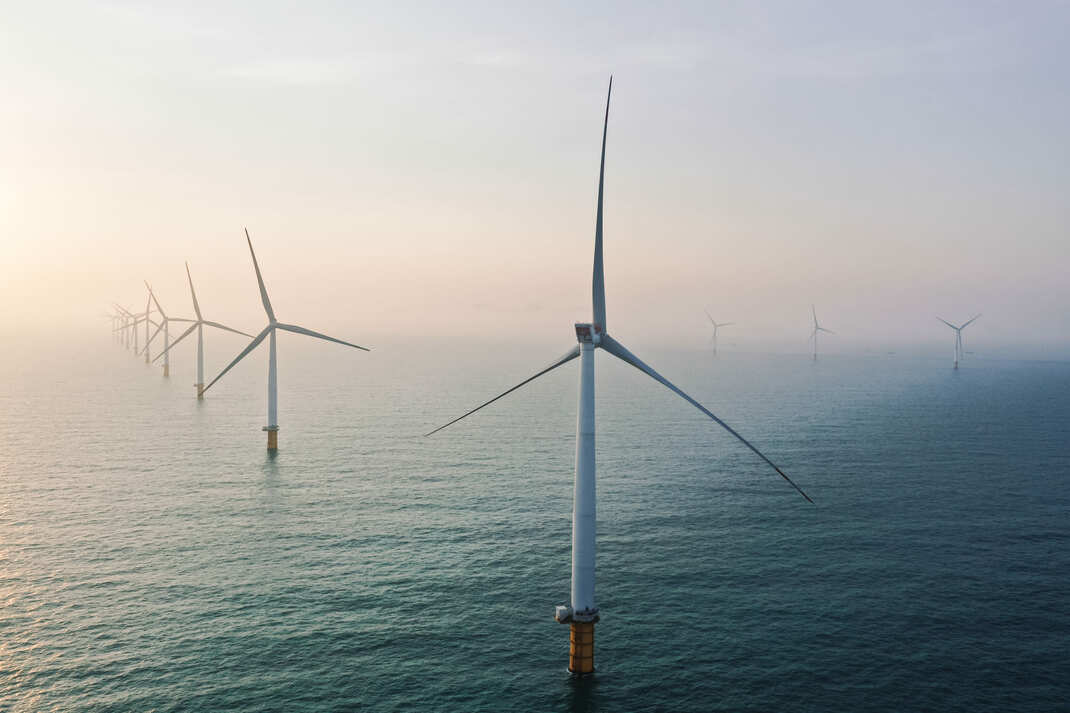
The huge level of offshore wind capacity secured in the latest CfD round, enough to power over 12 million homes, has firmly underlined the scale of the UK’s ambitions for clean energy.
For developers, investors and generators across the industry, the results have been widely welcomed. The doubling of the overall budget to £1.8bn, alongside increases in strike prices to better reflect market conditions, has boosted confidence across a sector which continues to grapple with rising supply chain costs, inflationary pressures and persistent planning delays.
The initial £900m allocated for fixed-bottom offshore wind under AR7 would only have been enough to support around 4-6GW of capacity, and with an eligible pipeline of 23GW competing for contracts, developers were facing record levels of competition.
Yet the results exceeded expectations. A total of 8.4GW was secured across fixed and floating offshore wind, comfortably beating the previous record of 7GW set in 2022.
This level of interest highlights both the strength of the UK project pipeline but also the attractiveness of the UK market as a stable investment environment, with the capacity secured the highest-ever seen in any similar auction across Europe.
While the UK continues to lead Europe in auction scale and complexity, many of the challenges shaping CfD delivery, from supply chain constraints to grid integration and evolving revenue frameworks, are increasingly mirrored across European markets. Experience gained in navigating a market of this size provides a strong foundation for engaging with other European schemes, where understanding policy design and price risk is becoming just as critical.
Beyond volume alone, the results have also provided valuable insight into how investors and developers are navigating a changing landscape in terms of costs, returns and risk, and what they are willing to commit to under the right market conditions.
Pivotal time for UK energy transition
The new capacity takes the total supported since the CfD scheme was launched in 2014 to more than 47GW. As well as offering predictable revenues for generators for the power they generate, the competitive auction mechanism has been credited with driving down the cost of renewable electricity over the past decade.
The latest auction round is seen as particularly significant for the energy transition. If all of the offshore wind capacity secured is delivered, it could put the UK within touching distance of its ambitious target to achieve a net zero electricity sector by 2030.
The National Energy System Operator estimates that between 43GW and 50GW of offshore wind capacity will be needed to achieve that target. With around 17GW currently operational and a further 10GW of capacity already in the pipeline from previous CfD rounds, the 8.4GW secured in AR7 reduces the gap to the lower end of the target range to around 7GW.
The additional capacity will also be critical in meeting growing power demand as more of the economy is electrified, strengthening energy security against a global political backdrop that has highlighted the need to reduce reliance on foreign energy imports.
The potential to leverage tens of billions of pounds of private sector investment through major renewable infrastructure projects is also strategically significant as the government looks to stimulate economic growth alongside decarbonisation.
Lessons learned from earlier CfD rounds
The outcome of AR7 is in contrast to the challenges of the previous two CfD rounds. No offshore wind projects secured a contract in AR5, while AR6 saw a drop in capacity procured with an underspend as project bid prices were too high to secure a CfD.
In response a number of reforms were put in place ahead of AR7. Most notably, budgets were published before the sealed bid window to reduce uncertainty and avoid underspends. Contract lengths have been extended from 15 to 20 years, improving investment certainty by reducing market price risk and lowering the cost of capital.
Another major change saw the latest round split into two separate auctions: AR7 for offshore wind technologies and AR7a for all other technologies, enabling offshore developers to proceed as quickly as possible. Offshore wind projects competed for Pot 3 (fixed-bottom) and Pot 4 (floating), reflecting the maturity of these technologies
For other technologies, some £295m is available under Pot 1 for mature technologies including onshore wind, solar and hydro, and newer technologies such as tidal stream, wave and anaerobic digestion will compete for £15m under Pot 2.
Most strike prices under AR7 were also increased to reflect higher costs in the sector. For fixed offshore wind they came in at £90.91 per megawatt hour (MWh) which the government stressed was 40% cheaper than the cost of building and operating new gas. Floating offshore wind is at £216.46/MWh, onshore wind at £92/MWh and solar at £75/MWh.
Collectively, these reforms to eligibility, budgets and structure have made the CfD scheme more investable at a time when global capital is increasingly selective.
Positive market signal ahead of AR7a results
The challenges involved in delivering the new capacity awarded are not to be underestimated, particularly given many other countries are competing for the same supply chain resources. Innovation across areas such as turbine manufacture, installation and project delivery will be critical in driving further efficiencies.
However, these results have undoubtedly sent a positive signal to the clean energy sector as it awaits the outcome of the AR7a auction for non-offshore wind technologies expected in early February.
The high level of interest seen from developers and investors in the latest round has highlighted the importance of a stable, investable framework to keep projects moving from pipeline to delivery. The combination of higher strike prices and budget saw investor appetite return, underlining the importance of striking the right balance between minimising costs and ensuring project delivery.
Looking ahead, a consultation is currently underway on further improvements for AR8 for delivery starting in 2028/29. Proposed reforms include streamlining the application and allocation process to reduce delays and administrative burdens on developers, a reminder that market design must continue to evolve in step with delivery ambition.
As the dust settles on the AR7 results, it is clear that when the policy framework is aligned with industry needs, it remains one of the most powerful mechanisms for driving large scale renewable capacity.

Take a deep dive into the results in our upcoming webinar
Join us at 11am on Wednesday 18th February as we explore the practical implications of the AR7 results for developers, generators and the wider market in our latest webinar, in collaboration with Cornwall Insight.