 GB
GB
 US
US



The New Rules of Power: implementing the recommendations of the Nelson Review
The findings of the Nelson Review have been out for more than 6 months and views have been forming on what the recommendations mean for the short, medium and long term future of the National Electricity Market (NEM).
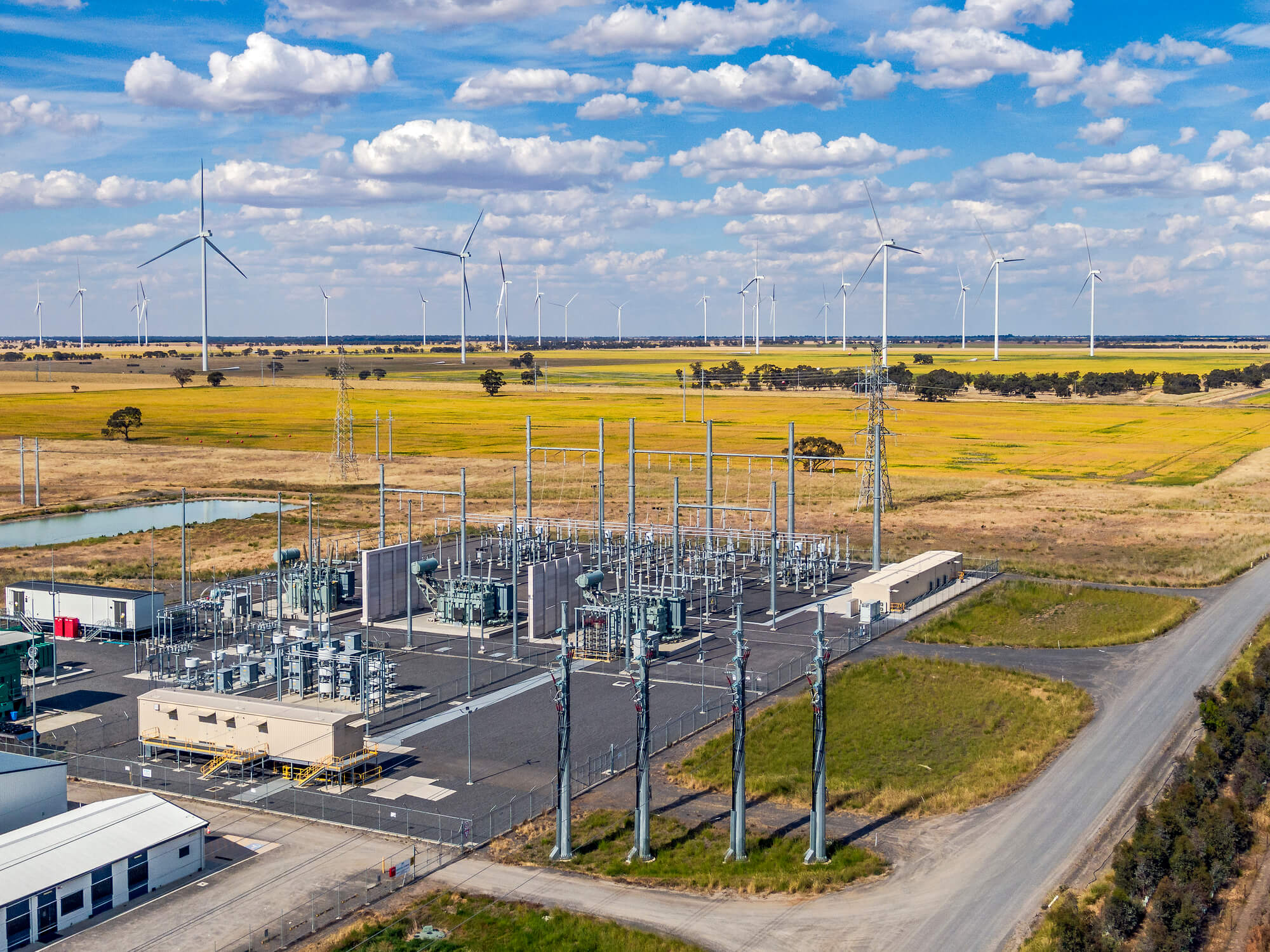
At its heart the Review aims to address some of the challenges associated with the transition to a grid dominated by variable renewable energy and supported with firming - one of the most far-reaching economic reforms ever seen in Australia.
Implementation has begun with the formation of the Industry-led Electricity Contract Co-Design Working Group. For up to 18 months, the Group will run workshops, undertake technical analysis and conduct stakeholder consultation to design standardised electricity contracts[1]. Contract structures should be ready for the first Electricity Services Entry Mechanism (ESEM) tender, anticipated for late 2027[2].
SmartestEnergy discusses the themes we see across three timeframes and share our views on the implications for energy buyers and developers.
The energy transition and its messy middle. A review of the wholesale energy market was needed.
Australia’s energy market has been slowly shifting from fuel-driven price formation to feature variable renewable energy, storage and flexible demand; and from a centralised to a decentralised model of generation and distribution. When established in 2025, the Nelson Review aimed to[3]:
- Provide recommendations on future energy market design beyond 2027 following the end of the Capacity Investment Scheme (CIS) which was designed to support new generation coming on line
- Address structural challenges of the energy transition and how three core markets can work together: the Spot Market (short term focus), the Derivatives Market (medium term focus) and the long term investment market (longer term horizons).
- Support the delivery of the Australian Energy Market Operator’s Integrated System Plan (ISP).
- Build an energy system that is adaptable, agile in adopting new technologies, and delivers economic dividends to energy consumers.
- Address price volatility and deliver more predictable, stable bills for consumers.
The Review saw an extensive industry and consumer consultation process over 2025. A draft report was released 6 August 2025, and the final report came out 16 December 2025 with only a few changes on the draft.
Short term (<12months): improving transparency particularly across consumer energy resources (CER)
Findings, key issues and possible outcomes:
- The spot energy-only market largely operates efficiently; however, the system is more weather dependent as renewable energy generation grows, resulting in increased price variability and volatility.
- At the same time there has been a significant growth in consumer energy resources (CER) ie. behind the meter solar and batteries, also known as “hidden participants”. For the market operator, AEMO, these participants make accurate forecasting increasingly challenging.
- The Nelson Review recommendations focused on the need for increased transparency of CER data and mechanisms to increase aggregation and coordination of CER assets.
- What could we see? State‑of‑charge transparency for storage is now embedded in the market[4] and will likely result in increasing regulatory scrutiny as the impact of more batteries in the system grows. Over time, we can expect price volatility to moderate provided networks are incentivised to schedule outages with clearer market signals, and improved CER visibility and coordinated participation reduces forecasting uncertainty and enhances overall system efficiency.
Medium term (1-3 years): supporting market liquidity
Findings, key issues and possible outcomes:
- Baseload generators have been large sellers of the traditional financial hedges used by retailers and customers for risk management eg. swaps, caps. However, the closure of coal fired power stations is reducing the liquidity of financial risk management products.
- The Nelson Review recommends a mandatory, always‑on Market Making Obligation (MMO) for specific hedge products to maintain liquidity. A more liquid market should enable participants to move or adjust their positions more readily, potentially putting downward pressure on hedging costs. However, there are still a lot of unknowns in relation to the requirements of entities with market making obligations around the products and contract periods they will be required to provide, and the regions they will need to service.
- Details are to be finalised by Australia’s State energy ministers and market bodies, but the earliest implementation is expected to begin with $300/MWh caps in South Australia. The market is expected to converge around 3 standardised financial product types:
- Bulk clean energy contracts – firm blocks of zero‑emissions supply, likely underpinned by Renewable Electricity Guarantee of Origin (REGO) certificates.
- Shaping contracts – such as virtual tolling arrangements or simpler top–bottom (TB) spread swaps.
- Firming contracts – with today’s cap contracts expected to remain the primary tool for covering scarcity events.
- The Review stresses that the NEM urgently needs deeper and longer‑tenor forward markets so that retailers can manage rising volatility and developers can finance capital‑intensive renewable and storage projects. You can read more about the tenor gap in the following section on longer term impacts.
- What could we see? Across wind, solar, Battery Energy Storage Systems (BESS) and Virtual Power Plants (VPPs):
- Wind and solar developers stand to benefit from more financeable, standardised and long‑tenor contracts.
- Grid‑scale batteries and VPPs will be expected to participate more actively in derivatives markets by selling shaping and firming products, not just providing spot‑market arbitrage.
- Standardisation should lower transaction costs, improve market access for newer or smaller portfolio owners, and better align battery portfolios with ESEM’s long‑dated investment signals.
- This shift may reduce barriers to entry and enable batteries to play a larger, more stable role in future contracting markets.
Longer term (3-15 years): incentivising investment in new generation and infrastructure
Findings, key issues and possible outcomes:
- The tenor gap is the difference between the length of offtake buyers are willing or able to contract verses the offtake term needed by developers to support the business case and bankability of new capital intensive projects. In practice we see buyers reluctant to sign beyond 7 years because of load and price uncertainty, yet developers need revenue surety for their projects of 7 to 30 years. The tenor gap is a key barrier to investment in new energy generation and infrastructure projects.
- In response, the Nelson Review recommended establishing the Electricity Services Entry Mechanism (ESEM), a credit worthy, central buying entity able to warehouse longer term generation and storage offtake volume to sell back to market participants at a later date in the form of standard products. The newly formed industry group is tasked with defining the standard products for selling volume back to the market. It is intended to be a permanent mechanism replacing the Capacity Investment Scheme (CIS).
- A practical example: if a developer needed a 15 year offtake but a buyer is only willing to sign a 5 year agreement, the ESEM steps in and provides procurement opportunities through standardised financial derivatives for those gap years.
- How does the ESEM provide procurement opportunities? The procurement of energy takes place through competitive auctions for three services: bulk zero‑emissions energy – solar and wind generation, shaping – shorter duration batteries, and firming – long duration batteries, gas peakers.
Auction volumes are based on state reliability and renewable energy targets, aligned with the National Electricity Objective. Contracts are standardised, fungible derivatives, codesigned with industry and able to be recycled back into the forward market before maturity. Developers sell early‑year output into the market and bid their long‑run spreads/costs for later‑year ESEM contracts. As such, lowest-cost portfolios win. ESEM warehouses contracts and releases them progressively as retailer and customer demand for long‑term hedges emerges.
The role and impact of gas peakers in auctions for firming services has been a topic of debate. Peakers are expected to be very competitive, if not dominant, in the auctions. They potentially have lower capital costs, operate using fuel not stored energy, and have shorter duration obligations than other forms of firming. Issues raised include the potential for crowding out storage, more reliance on gas (which has faced supply constraints in the past) and, if gas does dominate, inconsistency with decarbonisation targets and pathways. SmartestEnergy will continue to follow developments in this aspect of the ESEM implementation.
What are the implications?
There are benefits and challenges for wind, solar and BESS. Benefits include:
- Batteries and VPPs become key suppliers of shaping and firming products, not just spot‑market arbitrage players.
- More bankable, long‑term revenue through ESEM contracts will cover later‑year merchant exposure.
- Standardised bulk/shaping/firming products reduce transaction costs and improve market liquidity, supporting project financing and lowering the cost of capital.
- Reduced risk of “merchant tails” (volatile and unpredictable events), as the ESEM warehouses long‑dated contracts before selling them back into the market.
Challenges include:
- Higher transparency and compliance expectations, including evolving ‘state‑of‑charge’ visibility requirements.
- Greater scrutiny of auto‑bidding and operational behaviour, due to increased system reliance on flexible assets.
- Need to compete with longer‑duration storage (e.g. pumped hydro) in firming tenders where duration matters.
- Pressure to provide grid support (e.g. system strength, grid‑forming modes) where cost effective.
While the wheels of change turn, what do energy buyers need to consider now?
There are a number of outstanding questions:
- While Queensland has not given its in-principle support for the adoption of the Nelson Review recommendations, an implementation work program has commenced. However, what happens if Queensland remains unsupportive? Could we see the state adopting a modified or delayed rollout of reforms? Such an outcome could affect the uniformity of market mechanisms across the NEM[5] and as such could result in basis risk for large energy users and participants operating across multiple states
- If the MMO is successful in increasing liquidity in financial risk management hedges, will this result in reduced risk premiums and hedging costs? Could we see this flow through to retail contract prices?
- Who will formally manage the ESEM? What will be defined as the new standard products?
- Will addressing the tenor gap result in new renewable energy generation projects reaching financial close more quickly? Or will challenges and delays in planning and environmental approvals, grid connections and social license issues still pose material risks to new projects being built in the timeframe needed ie. before coal fired generation assets retire, and to achieve renewable energy targets.
In short, corporates should consider reviewing and adapting their energy procurement strategy ahead of the changes and be ready for any potential opportunities. Further, larger energy users (>30MW) and aggregated distributed resources are likely to be impacted as enhanced reporting obligations require them to improve the visibility of their demand side behaviour. Announcements and their implications will need to be assessed as we learn more about these market reforms and their timing.
Stay tuned: SmartestEnergy is following developments
To stay informed on key market insights, subscribe to our newsletter using the link below in the footer.
Footnotes:
[1]AusEnergy Services Limited| Industry-led Electricity Contract Co-Design
[2] Subject to ECMC (Energy and Climate Change Ministerial Council) approval
[3] Nelson, T, Conboy, P, Hancock, A, Hirschhorn, P | National Electricity Market wholesale market settings review - Final Report
[4] AEMO | Enhancing Reserve Information (ERI) project
[5] RenewEconomy | Energy ministers endorse Nelson market review to succeed CIS, with the exception of Queensland

Interested in learning more?
Our team of energy experts support corporates across the National Energy Market (NEM). Please get in touch to explore how we can help you with your energy goals.