 AUS
AUS
 US
US


Power Purchase Agreements
A comprehensive guide to PPAs for UK renewable generators
Understanding industry changes to your electricity billing
The way electricity usage is calculated and settled in Great Britain has changed. From your August 2026 invoices onwards, you may notice an adjustment to your billed consumption, which reflects recent changes across the energy industry to two long-standing parts of electricity billing, Transmission Loss Multipliers (TLMs) and the Grid Supply Point Group Correction Factor (GSP GCF). This adjustment is being made following updates to industry data used across the energy market. It is not specific to SmartestEnergy, but part of ensuring customer billing reflects the finalised industry values.
What is a Transmission Loss Multiplier (TLM)?
Electricity doesn't arrive at its destination in exactly the amount it left. As power travels across the national transmission network, the high-voltage lines carrying it over long distances and a small portion is lost as heat along the way. Transmission Loss Multipliers account for that loss, adjusting recorded consumption so it reflects the energy that had to be put into the system. TLMs are set by Elexon, the body responsible for electricity settlement in Great Britain, and applied consistently across the market. When losses on the network are higher, recorded consumption is adjusted up. When losses are lower, it comes down. And because final TLM values are confirmed after original bills go out, occasional reconciliation is a normal part of how electricity settlement works.
PPAs are increasingly relevant because:





This section covers the two main ways PPAs are categorised:
- Delivery models: how the power is sold
- Commercial products: how price and risk are structured
Electricity is delivered physically to the offtaker through the grid for a set period and price. This is the traditional and most common format for UK generators.
Often used in Corporate PPAs, sleeving describes the commercial arrangement between the generator, supplier / offtaker and corporate consumer. The supplier acts as an intermediary, managing settlement, balancing and the transfer of REGOs.
A purely financial arrangement similar to a Contract for Difference. No power is physically delivered; instead, a financial settlement is made based on the difference between market price and a pre-agreed strike price.
Within the different PPA delivery models, your commercial terms are defined by your PPA contract. These commercial structures are where SmartestEnergy adds significant expertise, determining how your price and risk are managed.
The product types we offer include:
Designed for generators with a government-backed CfD. SmartestEnergy provides a bankable route to market, aligned with the commercial terms of your CfD commitment, managing settlement and imbalance from construction and commissioning through to operation.
For generators seeking a more hands-on approach, these PPA options allow you to manage your asset's flexibility and sell your power across multiple transactions to achieve a market reflective price and maximise your generation assets revenue.
A fixed-price agreement that supports predictable revenues and protection from volatility. Ideal for generators prioritising stability over exposure to volatility.
Link generators directly with corporate buyers seeking renewable electricity and REGOs for sustainability reporting. SmartestEnergy manages all settlement and contractual complexity
Choosing a Power Purchase Agreement with SmartestEnergy
Watch our short video animation about some of the options available with SmartestEnergy when choosing a PPA:

Unlocking value from your generation assets
While PPAs are attractive because of the revenue security they provide, value optimisation is an additional benefit that has resulted in more generators opting for this contract type.
-
1
Revenue certainty
PPAs can provide a stable, predictable income stream — crucial for financing and long-term planning.
-
Managing shape and imbalance risk
Intermittent renewable generation carries profile and imbalance risk. We help you understand exposure and choose structures that reflect your asset’s needs.
-
Price optimisation opportunities
With access to SmartestEnergy’s market intelligence, you can respond to price signals and volatility.
-
Environmental value
Maximising the value of REGOs and additionality through direct access to wholesale markets and our C&I supply base.




Balance certainty and flexibility
Our PPA Risk Management Guide provides generators with a clear framework for understanding risk layers, pricing dynamics and routes to market.

PPA insights and market intelligence
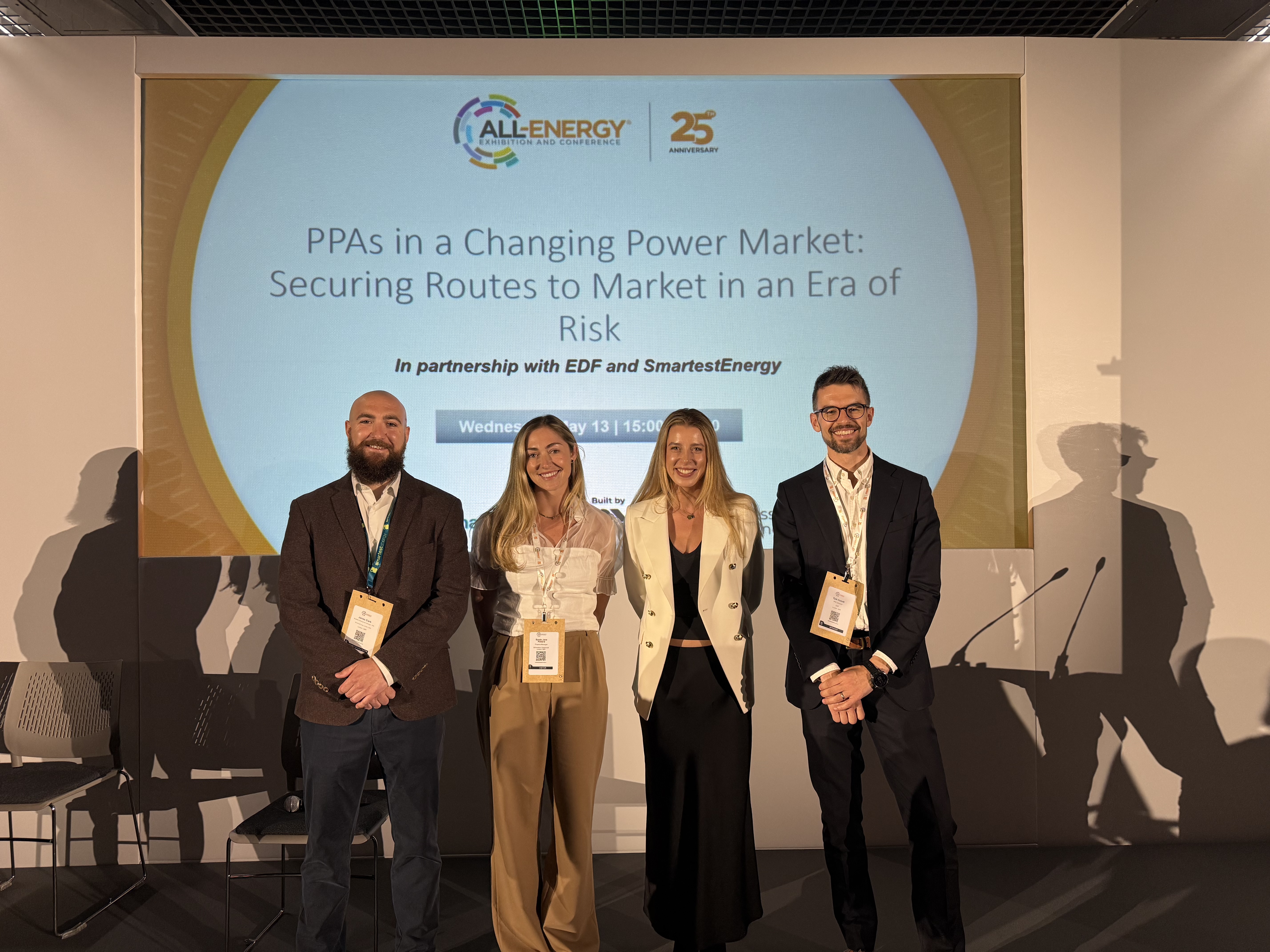
PPAs in a changing power market: Navigating risk and unlocking value

From development to investment: What UK energy projects need to unlock investor confidence

The role of CfD and CPPAs in the UK PPA market

Emerging trends in the future UK PPA market

Celebrating new Power Purchase Agreements and the acceleration of renewable energy growth with Blackfinch

Corporate PPAs: Achieving decarbonisation goals
Frequently asked questions
How long does a PPA typically last?
Most PPAs run from 1–20 years depending on asset type and investor requirements.
Do PPAs support project financing?
Yes. CfDs and CPPAs act as the two main options to support financing for new renewable projects.
How do REGOs work within a PPA?
REGOs can be bundled or unbundled depending on offtaker requirements and sustainability claims.
How do PPAs differ from merchant routes to market?
PPAs reduce exposure to volatility, while merchant routes increase risk in exchange for greater price upside.
Speak to a PPA expert
Whether you’re looking for fixed, flexible, corporate sleeves or CfDs, we’ll help you identify the right PPA structure for your needs and support you through every stage of the route to market decision.